I wonder if HSPs have an advantage in a crisis, as we are already very familiar with overwhelm. While that’s no guarantee that we are better equipped to deal with it, at least it’s not a new feeling. If we have learned to balance our sensitivities with a sense of perspective, perhaps we can rediscover sooner than others that our emotional reaction is not a measure of our capacity to cope.
Global pandemic really shouldn’t surprise anyone, as we have had a high level of rapid international travel for at least 70 years. What’s surprising is that it didn’t happen sooner. I don’t expect that to be a comfort, but I am ever-hopeful it will promote facing and planning for other future challenges (not holding my breath, though).
Hunkered Down
We are under stay-at-home order where I live. My lifestyle hasn’t changed much. I am already mostly self-employed and working from home. Being an introvert, I already spend as little time as possible where humanity is dense. It’s harder to get the food I’m used to eating, but that’s just a spur to creativity, as I delve into that long-untouched back row of jars on my beans and grains shelf (raise your hand if you had teff for breakfast).
However, my business had a slow period in January and February which demolished my savings in one fell swoop. In the past, there has always been a rebound within a few weeks, but now I suspect people are holding off on non-essential expenditures. As a result, I’m triaging my own expenditures, prioritizing rent and food. The utility companies are quick to reassure us we won’t be cut off for late payments, which is great. If only credit card companies would step up and do the same. So far, only my credit union has offered a no-penalty skip-a-payment option. Greed seems to survive longest of all, even on the roughest surface.
The Many Faces of Panic
One thing that has changed is that I am spending WAY more time on social media. This is part desire to keep current on the latest facts, part seeking the comfort of connection, part my unquenchable curiosity about how other peoples’ minds work, and part crusade to reduce the endless flow of misinformation.
I have been able to extrapolate from my own past experiences to understand some of the reactions people living a more typical lifestyle are going through. I still remember how disoriented I felt many years ago when I lost a job abruptly. After spending 10-12 hours a day working, getting to and from work, and preparing for the next day’s work, I initially didn’t know what to do with myself.
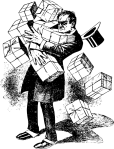 I remind myself of this when I become frustrated with neighbors whose entire repertoire for responding to a problem is to buy their way out of it, even when that means buying up things they don’t need and others do. I’m hoping it will wear off as they settle into new routines, realize that an enforced slower pace of life is not such a bad thing, and their dormant creativity awakens to reveal other routes to self-empowerment.
Finding compassion for people who spread misinformation is more of a stretch. What is this compulsion some people have to repost frightening and inaccurate news from sketchy sources that they haven’t even read themselves?? Judging from how my own friends are behaving, it looks like extroverts are the worst offenders, prioritizing their urge to communicate everything above quality of information.
If you are an extrovert with a large social media network following, please use that wisely to distribute useful news from credible, verified sources. You can be really helpful to the community, IF you screen like an introvert before you post. That means checking dates and sticking to stories from the last day or two, as the situation is changing rapidly. You can help reduce the endless recirculation of false memes that have already been debunked many times.
In the current situation, changing even one mind has the potential to save multiple lives.
Pre-screening links like an introvert means reading articles closely from beginning to end, twice if necessary, so you actually know what you are posting. It means scrutinizing the source of articles. Have you ever heard of them? Do they have relevant expertise on the subject, or are they quoting – and linking – authoritative, expert sources? Might it be better to post an article directly from one of those sources? It means posting only facts and avoiding speculation.
Weigh whether your personal need to share something alarming is as important as the greater need to keep everyone calm. Imagine what actions people might take based on what you post. Ask yourself whether that would be a good thing.
The crisis is also generating a lot of great humor. Spread that instead of fear.
I have compiled my own list of COVID-19 links (which I update as information changes) to counteract many of the common myths that are being endlessly, obsessively recycled. I can only wade through the fetid quagmire of phantasmagorical social media comments on news stories for short intervals. But I consider it a form of community service, and do as much as I can. In the current situation, changing even one mind has the potential to save multiple lives.
On a brighter note, I am a member of multiple locale-based Facebook groups, and it is really heartening to see how people are stepping up to help each other out. Interestingly, this seems to be much more widespread on rural Facebook groups than on suburban Nextdoors, perhaps because rural people are already more used to helping each other out through the vagaries of utility breakdowns and extreme weather (or then again, it might be because Nextdoor doesn’t moderate enough and only trolls still use it). The sense of agency and empowerment this generates for helped and helpers alike is tangible.
Depression in a Time of Global Stress
For me, the biggest challenges have been internal. My mood symptoms are reasonably well-addressed by the supplements I take, so I am not experiencing more gloom or anxiety than usual.
But there is more to clinical depression than mood symptoms. I’m drowning in inertia. Too open a schedule fuels procrastination, and is something I always wrestle with during the cloudy season when my seasonal depression is at its height. I was treading water before the coronavirus came along, but anticipating improvement as days lengthened and business picked up.
Instead, my schedule is now wide, wide open for the foreseeable future. I do have things I should be doing, but without a schedule, or deadlines, or the prospect of future demands arising upon my time that make it wise to stay caught up, and with the attention of anyone who might be annoyed by this decidedly elsewhere, I find each day slipping away in comfort activities.
Each evening, I firmly resolve to get a fresh start first thing the next morning. Each morning, other things intervene. Each afternoon, I decide too much of the day has gone by to start now. Lather, rinse, repeat.
One of the things I’m not doing is light therapy, at least nowhere near as much as I should be, which probably definitely has a lot to do with everything else I’m not doing. Without a reason to stay coordinated with external schedules, my sleep cycle has become rather random, which also has a detrimental effect on both mood and energy.
I’m trying not to regard any of this as a failure, since beating myself up has never yet improved my motivation, or anything else. This is a lot easier now that that everyone is struggling in one way or another. Whaddayaknow – without changing anything, I’ve suddenly become “normal”! Or rather, “normal” has become me.
Solutions
I’m not sure I’m in any condition to be offering advice to others, but here are some things I’m telling myself:
- Do your treatment plan/lifestyle management.
- Avoid major life decisions.
- Point your brain firmly away from fearful and self-chastising thoughts.
- Don’t obsess about things you have no control over.
- Calm anxiety with facts.
- Enjoy spring in a quieter, cleaner world.
- Virtually connect with mutually supportive others (introverts have an advantage here, as we were probably already doing that).
- Do the best you can, one day at a time.
- If you do even a little bit better today than you did yesterday, give yourself lots of credit.
- If you don’t, give yourself lots of love.
- Cuddle your inner child.
Above, below, and beyond everything else: “Just get through it.” That’s all you must do, and if it’s all you can do, it’s enough.
 sensitive type