Browsing through old drafts, I came across this unfinished post from 2016. I present it here as a prequel to my May post, Isms. More at the end…
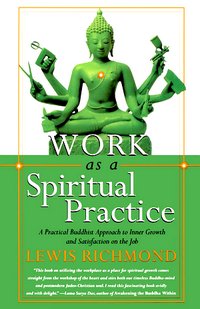
I found this book in my neighbor’s little lawn library, but did not notice the subtitle until I got it home. Buddhists again. What is up with that? Everywhere I look there seem to be Buddhists, or Buddhist practices. Am I resisting some inner calling or something?
I ponder that question. I am not a huge fan of organized (or even disorganized) religions. With the best of intentions, religions try to institutionalize direct experience, at which point it is no longer direct. Thus, self-contradiction is built into their foundations from day one.
I see spirituality as primarily a private, internal experience. Certainly spiritual inspiration can come from many sources, but overall, looking outside to better know yourself seems to me like a step in the opposite direction from where you are trying to get. (Of course, that perspective may be colored by the fact that I’m an introvert).
I think it’s just that Buddhists and I are often interested in the same things. I have had enough experience with (non-denominational) meditation to believe regular practice thereof would probably be good for me, though regular anything is not my strong suit. I often engage, HSP-deeply, with issues of justice, compassion, and ethics, and with the transcendent beauty of the world.
My feeling about religion is similar to my feeling about “higher” education. It’s all gussied up and locked behind a paywall, but really, it’s just reading and thinking and talking, and you don’t need an institution for that. The bureaucratization of spirituality and education seem designed to remove our individual agency in both, and sequester experiences that are a human birthright. I frown on that. Fierce, furrowed frowns.
In the first chapter of Work as a Spiritual Practice, Lewis Richmond says, “Spiritual practice is more about questions than answers, more about searching than finding…” Aha! I am certainly rich in questions.
He continues “…more about effort than accomplishment.” That’s where Buddhism and I part company. I want some answers for all my efforts, thank you very much. But maybe if Buddhism was a verb instead of a noun I could better relate. I could be buddhisming rather than Buddhist.
I’ll let you know how the book turns out.
The reason I never did is that I abandoned it shortly afterward. Creating a working life in which I could be my authentic self had been my focus for several years, and I had already discovered for myself most of what the book had to tell me. I was well on my way to finding a solution that got me out of the hierarchy, manipulation and profit-before-people orientation of conventional workplaces, so that I could live my values all the time, not just in my off-work hours.
Cov Id
Once upon a time when I was very young, I concluded that everyone should live alone for at least a year, not too long after they leave the parental nest, so they can discover how they really want to live without the noise and influence of anyone else’s likes and dislikes. I think a lot of people – some of whom were already living alone, but spending most of their interactive time at work – have had a similar opportunity, thanks to COVID. And having finally heard themselves, that voice will not be easily stilled again.
It can be a terrifying thing, discovering that you are not who you thought you were. Or perhaps you know your life is mismatched to your identity, and can even imagine what a life expressing your true self would look like, but you can’t figure out how to get there from where you are. In that case, go back to the beginning of this blog, because that’s exactly what inspired it.

SPOILER ONE: There’s lots of wheel spinning and false starting in the early years. Keep trying. It’s a test of your readiness to commit to your own happiness, and the person you have to prove that to is you. Errors are essential to growth. If you aren’t making any, you aren’t learning anything.
SPOILER TWO: I do eventually make significant progress.
SPOILER THREE: I’m still working on it.
Recent Passages
I listened to an episode of the Mayim Bialik’s Breakdown podcast featuring Wil Wheaton this week. Mayim, an HSP with ADD (as am I, probably) is always an experience. She gets so revved by her guests, and her brain races off towards associations in multiple directions from every point they make, which I can totally relate to. But this also leads to interrupted thoughts that never get fully expressed, which is frustrating for interviewee and audience alike.
Way before podcasts, I had a radio show (remember radio?). It was mostly music, but I tried doing a couple of interviews. I soon realized that I wanted to do most of the talking, which was unfair to my guests, and probably annoying to my 5 listeners. I’m good at intently listening interesting revelations out of people, but interviewers also have to be good at shutting up and taking the back seat, which I am not. Neither is Mayim, though she really tries.
Nevertheless, the long format (typically an hour and a half) of her podcasts and her high profile history allow her to attract interesting guests. I found a lot to relate to in Wil’s account of growing up with narcissists, and having to come to terms with not being loved by one’s own parents. I’m inclined to agree with him that in some ways, that inner small child grieving rejection by those who should love it most can never be fully healed, though I am open to the possibility that I may yet turn out to be wrong about that. But in the meantime, if I haven’t gotten over it, I’ve gotten used to it, as we do with life’s griefs.
 I also agreed with Wil’s assessment that the core feeling of an unloved child is sadness, not anger, and kudos to him for saying so, since it is still pretty taboo for men to say they’re sad. However, it’s crystal clear he’s also furious about it, and mostly out of touch with that. At one point he says he doesn’t feel angry at his parents at all, though he has been heating up and becoming audibly pissed off every time he mentions them for an hour by then.
But that’s OK. I understand the frightening hugeness of that rage all too well. It’s not only anger at the people who hurt us when we were vulnerable, when they were supposed to be the very ones who protected us from harm, it’s also anger at everyone who didn’t save us. It’s why I have an edge despite being an empathetic HSP, and perhaps I always will. I’m a little sad that I may never be as kind as I wish I was, but I accept it, and look for contexts in which an edge is a strength, or at least, can do no harm.
Mayim doesn’t seem to really believe Wil’s parents are as bad as he says, which is a resistance I have run into over and over again, particularly in women who identify strongly as mothers. I don’t quite get that. One bad mother doesn’t undermine the credibility of the whole bunch (but refusing to acknowledge her might).
It’s also a standard therapeutic response to challenge a client’s description of their parents as monsters. Stop that, therapists. NOW. There are monstrous parents, and you know it. And almost all of them gaslight their victims by ruthlessly undermining their trust in their own perceptions and belittling their pain. If a client’s parents weren’t really monsters, they will figure that out eventually on their own, but if they were, adding your voice to all the people who have ever dissed them in their lives when they came to you for help is unforgivable.
Wil Wheaton, I believe you.
I’ve been there too. I walked away from my mother decades ago, which was the right decision for me, though it ultimately cost me connections with most of the rest of my family, not because they were great fans of hers, but because if they acknowledged my pain, they would then have to deal with it.
I’ve come to see my mother in the context of her own life. She was raised by an alcoholic and one of the most withholding, controlling people I’ve ever met (which is saying something, ’cause I’ve met a few). Most of her behavior towards me was formed by her experiences long before my birth, and wasn’t really about me at all. She wasn’t capable of love, never having received it, nor of seeing me as a human being, as her parents never saw her as one. And as problematic as that is, it’s probably not her fault.
I can’t even blame her for having children she wasn’t equipped to nurture, and doing so for selfish reasons, much as I want to. Reproducing was the social imperative of her time. Nobody asked why someone was having children. They only asked why if they weren’t.
If this is forgiveness, I forgive her. But I don’t think it is. The damage she has done and the suffering she has caused can’t be undone. Loving myself, how can I forgive someone who has wounded me as deeply as deep can go?
Yet, my meta self sees that all experience is part of the chorus of the river. In the greater sense, it isn’t good or bad, it just is. In living my life, with all its up and downs and side ways, I am fulfilling my function in the whole.
Beyond
Out beyond ideas of wrongdoing and rightdoing,
there is a field.
I’ll meet you there.
When the soul lies down in that grass,
the world is too full to talk about.
Ideas,
language,
even the phrase “each other”
doesn’t make any sense.
Rumi
 sensitive type