Thank You for Sharing

I’m not a fan of TED Talks. What’s the point of recruiting interesting people who are experts in their field – who have highly detailed and specialized knowledge gleaned from years of intensive study – if you are going to impose an 18-minute time limit that forces them to generalize to the point of meaninglessness? No introvert thought that up, that’s for sure!

I’m similarly unenthused about “Big 5” personality trait theory, the extrovert bias of which I have ranted about elsewhere. I mention it only because one of the Big 5 traits is “agreeableness,” which is probably the inspiration for the same-named trait mentioned in this TED Talk.

Give and Take

Yes, this post is about a TED Talk, by organizational psychologist Adam Grant. Despite my skepticism about the format, his discussion of workplace sharing styles and how they relate to productivity and career success is highly relevant to my own experience.

Grant defines the sharing styles as taker, giver, and matcher. About a quarter of people are givers, a sixth are takers, and the rest are matchers. It’s interesting that a substantial majority are matchers. I’m betting most people think only in terms of givers and takers.

Go on, watch it. I can wait. You’ll love the part about the Canadian national slogan – so HSP! Continue reading
Dance Me to the End of Love

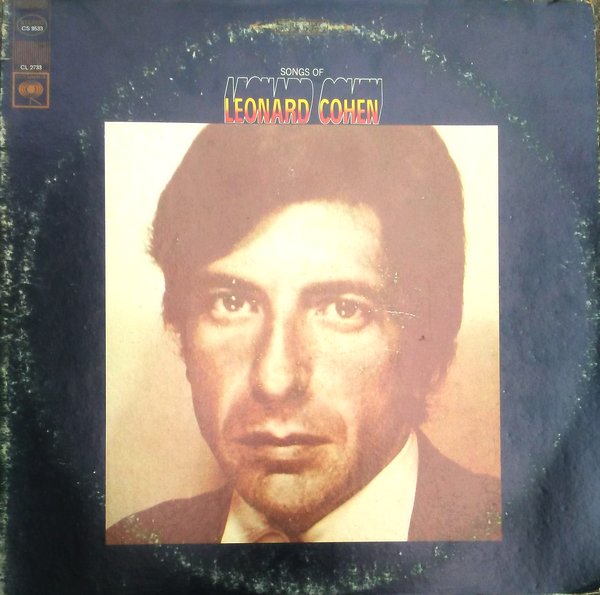
This is the first record I ever bought with my own money. That was 44 years ago.

44 years. So endless. So fleeting. We don’t know where that time goes, but we know this: After awhile, this week, too, will go there.

A worn LP jacket of the Songs of Leonard Cohen

Projection

OMG, I thought I was the only one who had a hard time parting with the colored paper clips!

This is a lovely little video that every HSP will want to bookmark for those days when there is just too much of everything going on, and you catch yourself wondering wistfully how the other 80% lives.

To see more of my favorite videos on sensitivity, visit my YouTube HSP Playlist.

Encouragement

Here’s a Ted Talk on sensitivity you will want to bookmark. Elena Herdieckerhoff’s description of sensitivity as being “in permanent osmosis with everything around you” is so right! Not only is she informative and entertaining (with a charming accent), but she embodies the subtle strength of HSPs. I’ve been feeling it for awhile, but I haven’t found the right word to express the power that lies in accepting ourselves even as we openly acknowledge our lack of armor. Maybe the word I’m looking for is “courage.”


Elena’s talk also reminds us that many of the negative reactions directed towards HSPs, whether they be men or women, are firmly rooted in sexism. The notion that emotion and reaction are feminine, and therefore an expression of weakness, is wrong on all counts. Emotionality and reactivity are not weaknesses, there is nothing inherently female about them, and last but not least, there is nothing weak or inferior about women!

But it’s hard to find words that express vulnerability AND strength. Impossible in fact. Check a thesaurus. All of the synonyms for vulnerability reference weakness and/or helplessness. And the lack of a conception of vulnerable strength is as bad for strength as it is for vulnerability. The synonyms for strength reference force, violence and domination. Before the world becomes a better place for HSPs, I think we will have to coin some new terms.

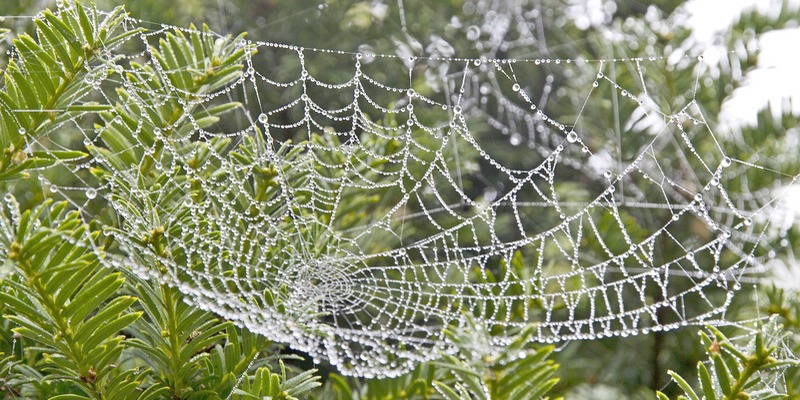
A dewy spiderweb against a background of evergreen boughs

Take Me Away From All This Death

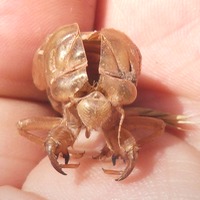
An empty cicada husk on the palm of a handOver the past few months, my life has been touched by death repeatedly. Cultural icons of my youth are dropping left and right, and I’ve learned a new hesitation to track down old friends and acquaintances. I’ve known elders who commented that everyone they knew was dead or dying, but I hadn’t expected to experience that in middle age. It has suddenly become difficult to ignore the inevitability of my own death, which I had fully expected to go on denying for another two or three decades, at minimum.
Continue reading

Being the Peace

I’m so angry today. I don’t know who to be angry at — but I’m furious! I don’t know what to do — but something must be done! So much must be done, where to even start? This is unacceptable! Yet I have to find a way to accept it.

A picture of a bullet against a black backgroundWhen I go to work, there is a little shrine on the sidewalk across the street from my office. This is where a 17 year old girl lay yesterday, after a stray bullet from someone else’s conflict smashed into – and ended – her life. Sitting at my desk, I heard that bullet.
Now, the shrine. While I gather windblown flowers and compose a note about senseless waste, other office workers from neighboring buildings stop by. We piece together our bits of the puzzle. There’s security camera footage that might help. Good.

Later, a crowd gathers – a very quiet crowd. I give up trying to concentrate on work and go down to see what’s happening. The street is partially blocked by people with “Stop the Violence” signs. Other survivors of other murders speak, sad and angry and trying to make sense of it. Then the man who called the gathering says, “Be the peace.”

I see at once that I am not being the peace. I’m too angry sad anxious frustrated disgusted frightened. There’s no peace in me right now. And there isn’t a lot of peace in the gathering, which I have to leave to return to work. It’s not so quiet anymore. But the anger and frustration I can still hear through my open window aren’t making me as anxious and stressed as angry crowds usually do. Today I can relate.

Yet even if I don’t remotely resemble the peace at the moment, or maybe because of that, I can see how being the peace makes sense. Which is saying something in the face of so much senselessness. Unlike all the macro “out there” things – the wounds to heal, the minds to change, the mountains to move – the choice in every moment whether to be the peace (or not) is entirely in each person’s power. Maybe it’s the only thing that really is.

Can I find my own way to being the peace? I don’t know. You’d think if it was easy I’d have already done it. But maybe I just never thought about it that way before. In any case, I’m sure going to try.

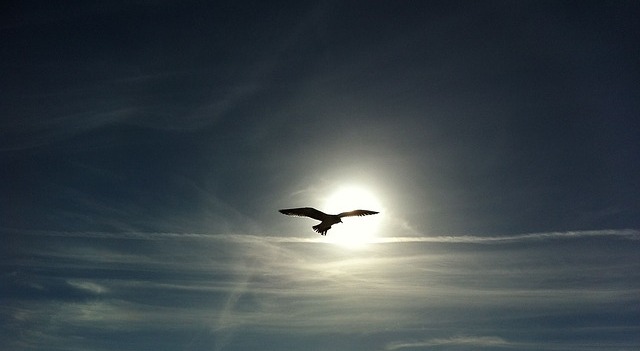
Photo of a bird silhouetted against the sun.

Quiet Revisited

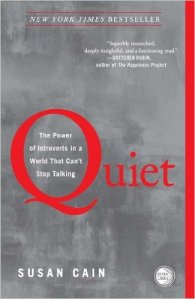
The cover of the book Quiet: The Power of Introverts in a World That Can't Stop Talking by Susan CainJenna, my comrade in bloggery over at The Wishing Well, just published a post about Susan Cain’s book, Quiet: The Power of Introverts in a World That Can’t Stop Talking. To my great surprise, her reaction to it was very different from mine. Since I had recommended it to her enthusiastically, I started out writing a reply in a comment, but it became way too long, so I’m publishing it here.

Wow, did we read the same book? Before I read Quiet, it had literally never crossed my mind that I was an introvert, much less an HSP (which Elaine Aron believes Susan Cain also is). I thought I was an extrovert inhibited by a tendency to isolate. I defended this, extolling the joys of solitude, as I still do. However, before I read Quiet, those joys were seriously undermined by my secret fear that solitude was an unhealthy indulgence, an escape from my shameful inability to interact “normally.” Whether it was my failure to produce extroverted bubble and bounce on command, or my persistent inclination towards behavior I had been taught was dysfunctional, I was coming up short no matter what I did. Continue reading

How the Light Gets In

Ring the bells that still can ring
Forget your perfect offering
There is a crack in everything
That’s how the light gets in

Leonard Cohen

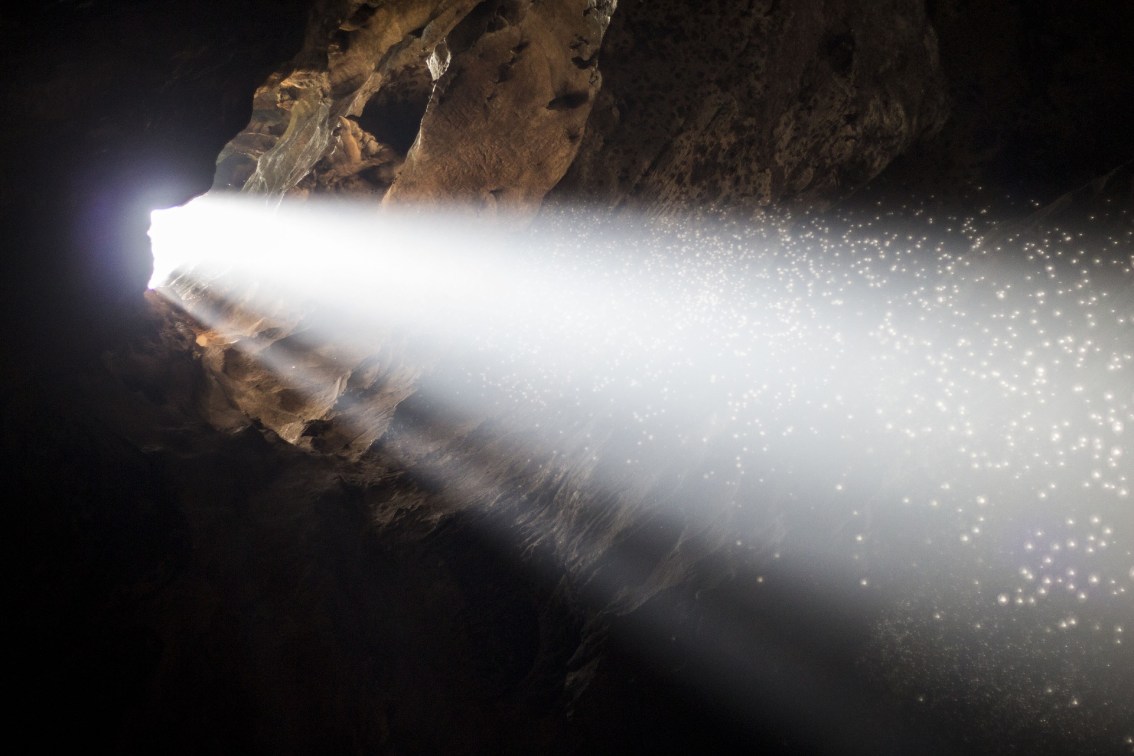
A bean of light shines into a cave through a hole at one side

SensitiveType on Facebook

My brain is abuzz with all of the things I read and see that I want to share with you. The backlog is getting too huge to ever catch up, though, so I set up a Facebook page where I can post things that don’t make it into a SensitiveType blog post. Check it out (there’s also a link in the right sidebar).
A screenshot of the SensitiveType Facebook page

Life After Death

Thanks to my readers who have sent their comfort. It does help.

After the past two weeks of constant intensity, I’m feeling a little numb. I think I reached my limit, and my emotions automatically shut off to give me some rest. I’ve been cleaning the house, catching up on neglected work, donating the leftover medications to the animal shelter.

I can’t really get away from it, of course. The house is too quiet, and wherever I look, there are signs of the life with three cats I used to live. Winter came while I wasn’t looking. The cold lurks in corners, ready to envelop me the moment the heater ticks off.
A sunset over a frozen lake
The surviving cat has never been alone in the house in her entire life. The first time I left her, after… she ran and hid when I came home. She came out when she realized it was me. It was someone coming in the door that had frightened her. The last person who came to the house was the vet who euthanized her sister.

I always wondered how the cat dynamics would change when there were only two, but it never occurred to me I might lose two at the same time.

Mom and daughter will be cremated together. It wouldn’t surprise me if my emotions come back when the ashes are returned to me in a couple of weeks. I’m grounded in the physical realm – cremation has always seemed more final to me than death, as if, as long as the body which was the vehicle of our connection still exists, that connection is not really broken.

In the end, one cat died “naturally,” and I had the other euthanized when every breath became a struggle. Neither of these was a “good” death. Maybe there is no such thing.