 Sensitive: The Untold Story is making waves. Gentle waves, in keeping with our subtle sensibilities, but discernible (to us, at least) nonetheless. How can I tell? Articles about sensory processing sensitivity are not only becoming more frequent, they are becoming more accurate.
Here’s one from Huff Post. The article is just a brief summary – the real content is in the video, which is a nice blend of first-hand account from an HSP, the scientific perspective, and then there’s the co-producer of the film, who isn’t identified as such, but she’s wearing the movie t-shirt.
Perhaps the distaste for being watched is more a trait of introverts than HSPs – I can’t really tell, being both. But other than that, there is not much to quibble at in the Huff Post video, which is rare and refreshing.
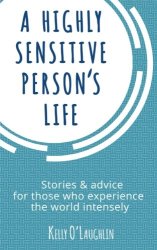 I’m not sure I’ve heard of Kelly O’Laughlin – the HSP in the video – before. Her memoir, A Highly Sensitive Person’s Life, came out earlier this year, and she’s raking in the positive reviews on Amazon. One reviewer noted that the book content is mostly from her blog, highlysensitiveperson.net.
I love that her most recent post is a self-described rant about a recent article on HSPS that also irritated the heck out of me. I never quite feel like I ought to be ranting, not that that ever stopped me. Thank you, Kelly, for modeling that it is OK for HSPs to rant, and feel good about it :)
BTW, Diana Hereld, the researcher featured in the video, is a grad student in music psychology. Check out her research page (scroll down for papers). HSP, right?
 Before I forget, I received an updated link to stream ($4.99) or buy ($9.99) Sensitive: The Movie. I just want to say again how much I appreciate that it is affordable.
If figuring out how to make a living is not your life issue, as it so inexorably is mine – first of all, take a moment to be seriously grateful about that! Then, ripple on over to the Sensitive movie merchandise page, and pick up a hat, mug, t-shirt or candle to support the Foundation for the Study of Highly Sensitive Persons in continued research and education.
The title of this post is also the title of an Emerson, Lake and Palmer song, which you can hear here. Kick back and take a meditative journey through the golden age of folk-rock. The video of which it is the soundtrack, though entirely unrelated, is an interesting journey too.

 I’ve never liked the concept of leadership, since leaders necessitate followers, and followers are what’s wrong with this planet. Not that we can’t all learn from one another. We not only can, we’d better. But the “one another” part of that is crucial. True role modeling is an all-way process, lubricated by the understanding that everyone has something to teach and something to learn.
 I had a conversation with a stranger about this once. I don’t recall how it came up, but the example under discussion was deciding what to do in a dangerous situation. She said in a situation like that, she’d be glad of someone to tell her where to go. “Even if it’s the wrong way?” I asked. She didn’t know how to answer this. As an opinionated person, I know perfectly well that force of belief is no measure of correctitude (it is too a word), but in her mind, authoritativeness and knowledgeableness were so inextricably linked that she couldn’t conceive of one without the other. Now that’s really dangerous.

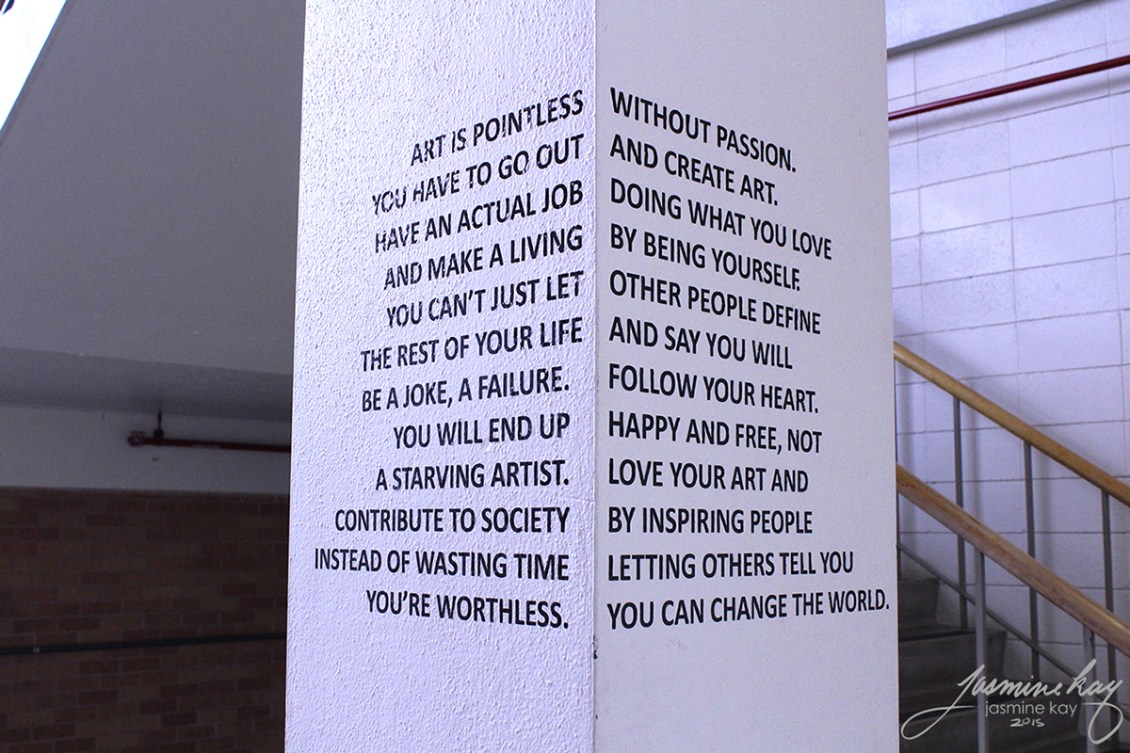
 It has become increasingly obvious over the past few years that figuring out how to make a living is a – if not the – major issue of my life. For those of you who speak astrologese, Saturn in the second house squares my sun. Translated, Saturn represents limitations, the second house concerns self-worth and income, the sun expresses identity, and a square indicates major challenges. Yup, sounds about right.
  And that turned out to be the case. I learned a lot about what I enjoy and need in a job, which is certainly an area in which any new insights are welcome. However, I was already financially behind when I started, and the job never came close to meeting my financial needs, despite representations that were made to me at the start. So it’s back to the food bank. I’m trying to stay optimistic, but it isn’t easy.
 sensitive type