I Don’t Mind Being Famous as Long as Nobody Knows Who I Am

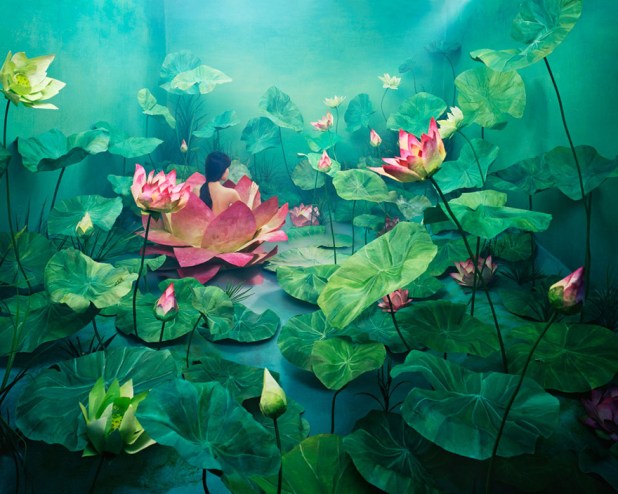
These days, I am always running into things that scream “introvert.” The work of Korean artist, Jee-Young Lee is a perfect example. First of all, she has created her own artform. She builds the installations in her tiny studio, and then photographs them. The photograph, a step removed, becomes the art, not the original installation. Ingeniously introverted, no?
resurrection-jeeyoung-lee
If that isn’t enough to convince you, click on the picture to see more of her work. She is in her own scenes, but always in the background, facing away from the viewer (and always alone). She reveals herself on her own terms, sans interaction.

Then I stumbled across this artist on SNL:
I had never heard of Sia before, and I couldn’t even tell what language she was speaking (Australian English, as it turned out). The contrast between the visceral creative force expressed through her voice, and her withdrawn physical presence was most intriguing. I felt like I was watching an avant garde performance straight out of the 60s.

What do you think? Am I just seeing introverts everywhere because I am one, or am I on to something?

1 Step Forward, 2 Steps Back: HSP Kudos and Call-Outs

HSPs, attend. First we have this outrageously negative and misinformed post about sensitivity from a life coach and “mental health administrator,” whatever that may be. Scary to think she might be “administering” the mental health of HSPs by taking their money and telling them they aren’t trying hard enough to “get over” their obnoxious sensitivity. Hint: You can leave comments. I suggest being kind, factual and constructive, since she was none of these.

Don’t listen to bad-mouthing! You are beautiful!

Don’t listen to bad-mouthing! You are beautiful!!


Also, the Wikipedia entry on sensitivity has lately been labelled as a “fringe theory.” Admittedly, the article was not as thorough as it could’ve been, and I can only applaud Wikipedia’s general intention to improve the quality of psychology-related entries, but have they considered what the effect might be on a given population to have a category they identify with suddenly labelled “fringe”? The person who applied the designation admitted he didn’t have the time to follow up, which strikes me as highly reprehensible. I mean you, Genandrar!

Most of the criticisms of the article as it was in April, when the “fringe theories” tag was applied, have now been addressed, and I would suggest that it is past time for Wikipedia to remove that tag from the HSP entry. I would also suggest they develop a more sensitive way to improve psychology entries without dissing people. And what, pray tell, is “appropriate  weight to the mainstream view” (emphasis all mine)? With that kind of thinking, kiss innovation goodbye.
Inhale… aaaaaannnnd exhaaaale.
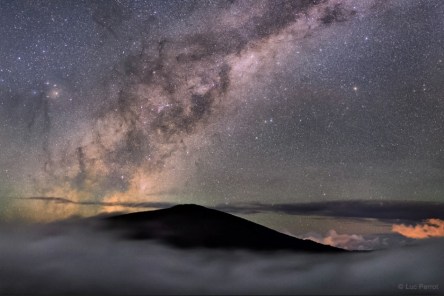
The universe is vast. Annoying humans are transitory.


By now, you are probably ready for this delightful post, chockful of suggestions for HSPs that are actually insightful and useful (take note, Faydra Rector):

When You Need Stillness

Love her image of the mind as a ping-pong table. I was just thinking, “this woman has got to be an HSP,” when she said she was. I do so enjoy being right :)

And on the introvert side, we have another charming post:

12 Problems Only Introverts Understand

It gives me hope that one day we might enjoy Friday dialogues like this one:

What are you doing this weekend?

I’m going to stay inside completely.

Oh, that sounds wonderful, I’m so jealous. I have to go to a party.

Oh, you poor thing. Take a hot bath and don’t call me after.

My Favorite Housemates are Feline

I was recently struck by a sub-heading in Holly Klassen’s Huffington Post blog piece on parenting as an introvert: “They are with you ALL THE TIME.”

I don’t know whether it’s an introvert thing or an HSP thing, or both, but that sentence neatly encapsulates my experience of other human presences. They don’t have to be doing anything, or saying anything. They don’t even have to be awake. Just the awareness of their presence in some way engages a portion of my energy, rendering it unavailable for other purposes. It’s like a computer process that runs in the background and eats up all your RAM, slowing down normal tasks, and making high-resource tasks impossible.

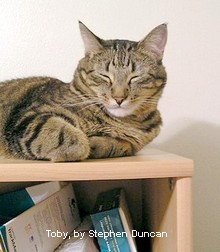
A dozing cat lies on a desktop shelfThis doesn’t happen with animal companions, however. I have often contemplated why I prefer to live with animals, but was never able to pinpoint it – until I read that sentence. The cats I share a home with are also with me, literally, all the time, not just somewhere in the house, but often in the same room I am in.  Yet somehow, my attention is not engaged in the same energy-consumptive way. If this is true for other HSPs, it may explain why HSPs are more likely than average to have a strong affinity with animals. Continue reading