That would be me. Sensitive: The Untold Story was fine. I would buy it and show it to people, which I think is what it’s for. I am still processing it (naturally!) and will have more to say about it later.
 As for the premiere, nobody paid any attention to the dress code, as far as I could see. Guests arrived in everything from jeans to red carpet attire. I dressed for comfort more than display, and was glad I did. Several times during the discussion that followed the film, Elaine Aron advised HSPs to “do what you need to do” to take care of yourself, regardless of what people say, so that’s all good.
I’m still disgruntled that we were told how to dress. A reminder not to wear scents would’ve been a lot more useful. I had to change my seat due to a woman doused in so much perfume that it gave me an instant headache from 4 rows away. And then I felt bad about doing so, because she was also there alone, looking uncomfortable, and I didn’t want her to feel rejected!
I surveyed the crowd and tried to determine if there was anything different about it. This was hampered by the fact that I don’t have much basis for comparison, as I avoid crowds assiduously. Maybe there was a little more automatic consideration of others. Conversations were animated, but not loud. And only a very small handful of people came alone. Other than that, I couldn’t really tell I was in a roomful of HSPs. I’ll have to work on my sensitividar.
I recognize my fear was exacerbated by being an HSP. I knew it while I was I writing my last post, but that didn’t reduce my anxiety one iota!
As someone who has benefited so greatly from Elaine Aron’s work, I felt I was not being entirely nice to raise class issues in that post. I wouldn’t want to hurt her feelings. Yet, the issue is a valid one, so would it be fair to myself not to raise it, out of fear of offending or swimming against the tide? Fair vs. nice, always a challenge!
Ultimately, I let the critique stand, along with the fear, as an example of HSP thinking. Aron knows this thinking all too well, so I think she will understand. She is, after all, a psychologist!
There are a couple of other things going on with me lately that I haven’t written about yet due to the impending premiere. I’ll talk about them in upcoming posts.
 I view the “happiness movement” with skepticism. If you aren’t familiar with it, it argues that unhappiness comes from framing our experiences “negatively,” and if only we reframe them “positively,” we can be happy.
  There are many depictions of non-usual mental states in story and song, including some excellent first-person representations of mental disorders. Edgar Allan Poe, for example, is famous for his accounts of psychotic breaks in the first person. Sometimes we know we are witnessing “madness,” as Poe called it, but sometimes these descriptions are framed as something else.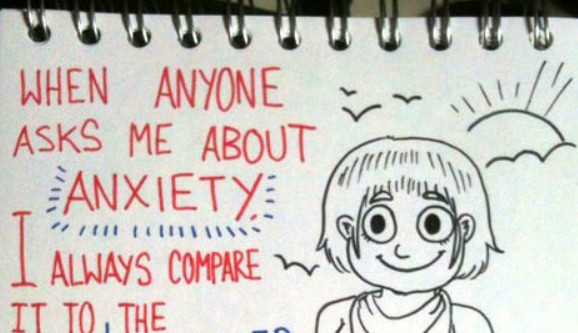
 sensitive type