Thank You for Sharing

I’m not a fan of TED Talks. What’s the point of recruiting interesting people who are experts in their field – who have highly detailed and specialized knowledge gleaned from years of intensive study – if you are going to impose an 18-minute time limit that forces them to generalize to the point of meaninglessness? No introvert thought that up, that’s for sure!

I’m similarly unenthused about “Big 5” personality trait theory, the extrovert bias of which I have ranted about elsewhere. I mention it only because one of the Big 5 traits is “agreeableness,” which is probably the inspiration for the same-named trait mentioned in this TED Talk.

Give and Take

Yes, this post is about a TED Talk, by organizational psychologist Adam Grant. Despite my skepticism about the format, his discussion of workplace sharing styles and how they relate to productivity and career success is highly relevant to my own experience.

Grant defines the sharing styles as taker, giver, and matcher. About a quarter of people are givers, a sixth are takers, and the rest are matchers. It’s interesting that a substantial majority are matchers. I’m betting most people think only in terms of givers and takers.

Go on, watch it. I can wait. You’ll love the part about the Canadian national slogan – so HSP! Continue reading
When Personality Traits Collide: Clifton Strengths A-B

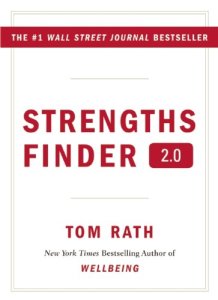
Cover of the book, Strengths Finder 2.0I’m working my way through the list of Clifton strengths alphabetically, a few strengths at a time. That way I can thoroughly process them before I move on to the next group (like the HSP introvert I am!).

Each section in Strengths Finder 2.0 begins with a long paragraph describing the feelings, mindset and behavior associated with the strength under discussion. Next comes a “how it sounds” section, with quotes from several people about their experiences with the trait. I find this section especially helpful, as the language they use is often different from the description paragraph.

Next comes “Ideas for Action,” which lists ways to work with your strength so it doesn’t drive you – or the people around you – crazy. The approach to each strength is relentlessly positive, beginning with the strategy of framing arguably neutral personality characteristics as “strengths” in the first place. However, it is obvious from reading between the lines that each type can be unhappy and/or obnoxious with a mismatched environment or companions.

This brings to mind Marianne Cantwell’s assertion that “a weakness is a strength in the wrong environment,” a reframe which is probably not original to her, but which gave me much hope when I first read it. Gallup (the organization behind the Clifton Strengths system – yes, the poll people) is upfront that their agenda is to encourage people to work with their personality rather than beating their heads against the wall trying to be what they’re not. That’s hard to argue with.

Each strength description wraps up with a few words to the wise for those who find themselves interacting with people who have that trait. Advice is given on what they will be best at, and where to adjust expectations, or allow them some latitude.

The A through B strengths are Achiever, Activator, Adaptability, Analytical, Arranger, and Belief. Achiever is the only one I read last time I had the book, and as I’ve mentioned, it resonated. This left me wondering whether I’d find the other strengths equally easy to identify with. Continue reading

HSP Ethics at Work

triangular red alert sign in front of dark storm cloudSigh. Just when I was getting on my financial feet again, a big storm blew up at work, and I’m not sure my job will survive it.

This has happened before. Frequently, in fact. When an employer bad-mouthed a single parent co-worker for staying home with a sick child, I felt compelled to stand up for her. I was fired within the week (and so was she, a few months later).

I’ve  also departed from several companies over dishonest sales tactics or false promises to customers or clients. Employers salivate over my ability to connect, but become disgruntled when I decline to dishonor those connections to their advantage.

Then there have been more complex situations, involving bullying circles, or employees close to the boss who exploited that situation at the the expense of others. I haven’t always been the target in these situations, but I know what it feels like. I couldn’t stand by and watch the same thing happen to others. Continue reading