 It’s been a rough spring. The clouds won’t quit. They’re damping down my everything. I replaced my SAD light bulb, but my light meter showed no change. So I waived my no-new-charges credit card policy just this once, and bought a new light, only to get the same readings. So much for the light meter. But whether the light is too weak or my SAD is too strong, I don’t need a meter to tell me it isn’t enough. Continue reading
Tag Archives: light therapy
Looking Up from the Bottom of the Year

When poets refer to the “dark night of the soul,” or gasp “more light!” with their dying breath, I know exactly how they feel. As a person with Seasonal Affective Disorder, my personal objective each winter is:
Just get through it.
So it will probably not surprise anyone that today, the Winter Solstice, is my favorite holiday. Last night was the longest night (and shortest day) of the year. Starting today, each span of daylight gets a little bit longer for the next 6 months. There is another month or more of chilly weather ahead, but I made it through the bottom of the year, a very heartening milestone. Continue reading
Everybody talks about the weather, but nobody does anything about it
About those other things that have been going on with me lately? One of them is the weather. We just had a nasty heat wave, and I have Seasonal Affective Disorder.
A SAD State of Affairs
SAD, or, as it is officially (but inaccurately) known, Major Depression with Seasonal Pattern, is clinical depression in response to factors in the physical environment.
 Winter SAD, which you may have heard of, results from insufficient exposure to light. It was first observed as a winter-related phenomenon, since sunlight is weaker, days are shorter, and clouds are more common during winter in many climates.
However, SAD can also be found year-round in people who work at night and sleep during the day, or even those who live in sunny places but spend very little time outdoors. That makes the name misleading, and the official diagnostic criteria just plain wrong in far too many cases.
Summer SAD, which you probably haven’t heard of, is major depression triggered by heat, usually in conjunction with humidity (I’m fine in the desert). It also is not necessarily seasonal, but can occur wherever someone is exposed to hot and humid summer-like conditions, whether natural or artificial.
I have both types of SAD. Continue reading
When Personality Traits Collide: Clifton Strengths A-B
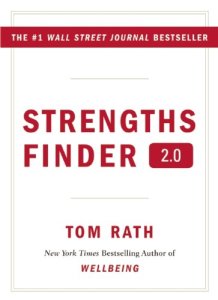 I’m working my way through the list of Clifton strengths alphabetically, a few strengths at a time. That way I can thoroughly process them before I move on to the next group (like the HSP introvert I am!).
Each section in Strengths Finder 2.0 begins with a long paragraph describing the feelings, mindset and behavior associated with the strength under discussion. Next comes a “how it sounds” section, with quotes from several people about their experiences with the trait. I find this section especially helpful, as the language they use is often different from the description paragraph.
Next comes “Ideas for Action,” which lists ways to work with your strength so it doesn’t drive you – or the people around you – crazy. The approach to each strength is relentlessly positive, beginning with the strategy of framing arguably neutral personality characteristics as “strengths” in the first place. However, it is obvious from reading between the lines that each type can be unhappy and/or obnoxious with a mismatched environment or companions.
This brings to mind Marianne Cantwell’s assertion that “a weakness is a strength in the wrong environment,” a reframe which is probably not original to her, but which gave me much hope when I first read it. Gallup (the organization behind the Clifton Strengths system – yes, the poll people) is upfront that their agenda is to encourage people to work with their personality rather than beating their heads against the wall trying to be what they’re not. That’s hard to argue with.
Each strength description wraps up with a few words to the wise for those who find themselves interacting with people who have that trait. Advice is given on what they will be best at, and where to adjust expectations, or allow them some latitude.
The A through B strengths are Achiever, Activator, Adaptability, Analytical, Arranger, and Belief. Achiever is the only one I read last time I had the book, and as I’ve mentioned, it resonated. This left me wondering whether I’d find the other strengths equally easy to identify with. Continue reading
 sensitive type