Depression is not a personality type. It is a painful, confusing, exhausting, and PREVENTABLE impairment of the most important organ in your body.

Depression is not a personality type. It is a painful, confusing, exhausting, and PREVENTABLE impairment of the most important organ in your body.
Here are a few of my favorite HSP-related videos for your viewing enjoyment, or to share with people in your life who may not be ready for the whole movie yet.
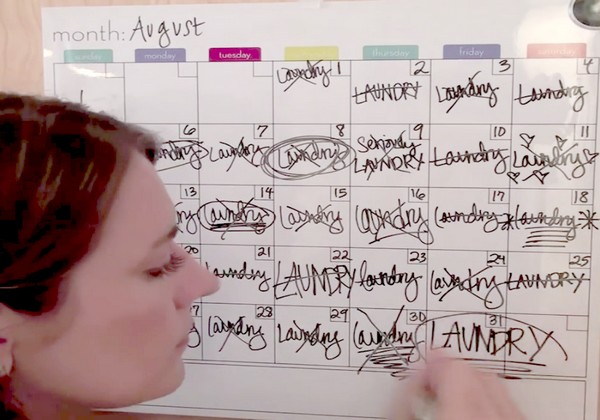
Ane Axford & friends act out traits of HSPs. This list has some things I hadn’t heard elsewhere – it was the first place I heard that HSPs are often perceived as flirting when they’re not, which explained a lot. I think my favorite is #7. Or maybe it’s #9. Or is it #8?
I most enjoy this video for the list (from 1:50 to 6:00), which is bookended by text that won’t be news to anyone who already identifies as HSP. However, the opening and closing verbiage and humor of this video makes it a good one to gently introduce someone to the sensitive trait. Continue reading
 As I discussed in a previous post, identifying my strengths has been a huge challenge for me. A couple of weeks ago, I discovered the Strengths Finder test, first released by the Gallup Poll people in 2001, and updated to Strengths Finder 2.0 in 2007. The philosophy of the assessment is that there’s too much focus on overcoming one’s deficiencies, which may not even be doable, instead of on recognizing and developing one’s natural talents. There’s a book that accompanies the test to explain the 34 different strengths.
While I was waiting for the library copy of the Strengths Finder 2.0 book to become available, I took a free Strengths Finder test offered by a virtual coaching website, workuno. Continue reading
Readers who follow SensitiveType will have read my description of trying to work some advice I read on the Free Range Humans blog (advice which you can hear many other places as well): Find your strength.
I was baffled about what my strength might be for the longest time.
Now that I have finally figured out what I want to do, if not quite how to do it, guess what I came across today? StrengthsFinder 2.0. That’s right, there is a test for that. What’s more, it’s been around for several years. Why didn’t anybody tell me?!
Continue reading
I took a hike to the top of a 6,000-foot ridge one summer. It had a great view of the 14,000-foot extinct volcano 20 miles away. Hailing from a state where the elevation tops off at 1,000 feet, experience had to teach me the counter-intuitive fact that a mountain looks bigger the higher you get.
Continue reading
 Recently, a fellow HSP blogger raised the question of whether knowing one is an HSP might make depression a little easier to handle. In other words, could knowing you are an HSP help you to take a step back and become conscious of your own reactions and needs, instead of automatically acting them out? Continue reading
Whether it's from being an HSP or an introvert, or both, the gigantic mismatch between the amount of down time I seem to need, and the actual time I have left after working and running a household continues to be a major issue. Continue reading
 It’s so annoying to have to leave a job just when you’re getting good at it. I’d like to at least know what happened with my boss. I have the distinct impression our conflict was about something other than it appeared to be. Unfortunately, Mr. Not So Nice After All Guy isn’t owning up. Is that fair? Yeah, yeah, life ain’t. That doesn’t mean I have to like it.
Supposedly, HSPs have superior intuitive and empathetic perception. I’m not entirely convinced on that point. I have been told more than once that I discerned things a person didn’t even recognize about him/herself, usually long after the fact (and mostly by water signs, but that’s another post). On the other hand, I seem to be singularly blind to red flags in an employment context. Continue reading
 I’ve been busy with my new job (which is, happily, working out), so I haven’t had time to do more than think about being an HSP/introvert lately. Nevertheless, I can feel my understanding of both evolving. I’m beginning to see probable HSPs and introverts in my daily environment, as well as to identify them in the memories of my past interactions. It gives me a better understanding of other peoples’ motivations and responses, as well as of my own. I don’t know if I necessarily feel better about people I had conflicts with, but those conflicts feel less personal. I realize that they really didn’t comprehend how I experience things at all. And I didn’t understand that they didn’t understand.
I’m also beginning to perceive at least a little about how introversion and high sensory processing sensitivity are different, especially in the area of interactions. Continue reading
This blog really started two years ago. I’d been having trouble finding the right job. A LOT of trouble. Something was obviously up, and I honestly didn’t know what. So I sat down in the middle of my life and refused to budge until I figured it out.
I didn’t make much headway for the first 18 months. Well, that’s not entirely true. My bruised ego slowly recovered from the last Job From Hell. I started a blog on one of my quirkier interests. I found my high school friends on FaceBook. I took a summer job. I studied a foreign language. I explored a new career. All good.
But my wallet was getting slimmer and slimmer, with no better understanding of what was broken, and what to do to fix it.
I love silence with a passion. To me, it’s not an absence of something, but an iridescent, sublime presence, that can move me to acute and transcendent bliss. It’s better than really great chocolate; it’s better than sex. I live in the cultural void of a suburb because it’s relatively quiet for an urban environment.
But not really. Dogs bark. And bark. And bark. Yard services descend, sensurrounding my hapless home like invading hordes brandishing motorized clubs and maces. Compulsive remodelers practice their filthy habits right out in the open for everyone to hear. I’ve been trying to figure out how to escape to the country and still have an income for years.
Enter Susan Cain. One day when I was listening to the radio to avoid overhearing my neighbor’s 8th phone conversation in two hours, I came across a radio interview about her new book, Quiet: The Power of Introverts in a World That Can’t Stop Talking.
The subtitle seemed to set introversion and talking in opposition. I’m a talker. So I couldn’t be an introvert, right? But luckily, any book called Quiet was too intriguing to pass up.
Susan Cain described some introverts. They sounded an awful lot like me. Could I be an introvert after all?
I thought being shy about talking was pretty much the definition of introvert. And I’m not. Really, really not. I initiate conversations with strangers at the bus stop. I speak first (and second, and third) in meetings. I’m the person whose hand the teacher has to ignore so others can have a chance.
But as it turns out, the defining characteristic of introverts is not their level of sociability, but whether contact with others energizes or tires them. Hmm.
I love being alone as much as I love silence. I have a great time playing by myself, and never feel like it would be more fun with company. When I start a new relationship, I go through the 5 stages of grieving for my lost alone time. And when I end one, getting it back is a substantial consolation.
But what do you call that? I’ve been struggling for years with the title, “loner.” Isn’t that some creepy guy with bad hygiene and massacre fantasies?
I feel like I have to make the effort to prove I’m not the female version of that guy (aging cat lady), but I start to feel overwhelmingly busy if I go out more than twice a month. And that’s when I’m not working full time. If I am, once a month, tops.

Visual Intermission
Me and my brain, we’ve been through tough times before. Like 38 years of undiagnosed depression. That was bad.
Then there was menopause with its total collapse of memory and focus. But I’m back to normal now. Well, I think I am. My memory of what I was like before is a little hazy. And also… in addition… one other thing… damn, what was I talking about?
Realizing that I was clinically depressed transformed my life. Once I understood what that meant, it reframed everything. And for awhile, treating depression was the answer to every problem.
When that didn’t work for my job issues and solitary tendencies (which I regarded as something to be solved), I thought it meant I hadn’t fully resolved my depression. Even though I felt pretty good.
And then I heard Susan Cain on the radio. I immediately bought her book (which I never do). I worked my way down the list. Check, check, check. Wait, needs to think things over? I’ll get back to you on that.
I dug out the Myers-Briggs test I took 20 years ago. I loathed every minute of that test. Choosing between pairs with no option for “both” or “neither” was torture. I refused to answer 40% of the questions. The counselor said the outcome would be accurate anyway. Seriously?? If it’s valid with only 60% of the questions, why was it so damn long??
But right there in my resulting type, the very first letter, the I… that stood for Introvert. Omigod, thought I, I’ve been a certified introvert for 20 years, and never knew.
But what about my verbalness? Was I an ambivert? I’m ambi-a lot of things, so it wouldn’t surprise me, but I get a little tired of seeing all sides. Introvert was such a good fit otherwise. It explained so much.
Susan Cain writes about introverts pretending to be extroverts. I had never asked myself whether I was really comfortable with my verbal assertiveness. One-on-one, yes, comfortable and natural. In other contexts… maybe not. It’s more like I feel compelled to do it.
Where did that come from? Maybe from the way my father trained me to use multisyllabic sentences to entertain his friends when I was still a toddler? When the average 2 year old was pointing and grunting, I was answering the question, “would you like some more?” with “I’ve had a sufficiency. Any more would be a superfluity.”
I was so young, I barely remember doing this, and I certainly don’t recall how I felt about it. But the part about engaging adult attention with verbal skills, that stuck. Adult attention is equivalent to survival for children.
I started giving myself permission to sit on the sidelines, being present in a conversation, but not participating as actively. Surprise! That was actually pretty comfortable. More comfortable than being the center of attention in some situations.
What a shock to realize I’ve been operating under a sense of pressure to perform my whole life without ever being conscious of it.
Susan Cain’s Quiet describes a conference for Highly Sensitive People. I’d heard of that in passing, but didn’t know what it was. My immediate reaction to the label was negative. Was it some kind of neurotic elitism?
But as Cain continued to describe the conference, things started jumping out at me. She mentioned Elaine Aron, the research psychologist who defined the type and coined the name. I visited Aron’s website and took the self-test. Once again, check, check, check. ALL of the 27 traits on her self-test were true of me.
What was going on?? Was I just in an identifying mood? But no. It turns out (according to Elaine Aron) that Susan Cain is an HSP as well as an introvert, and much of her book really pertains to the former category rather than the latter.
Introverts make up more than half of the population. People with high sensory processing sensitivity (a less button-pushing name for HSPs) are more like 15-20%, according to Aron.
Finally, the job problems were explained. Turns out, my skill set primarily qualifies me for jobs and work environments that are the worst possible match for my personality type.
I’m still figuring out what’s an HSP quality vs. an introversion quality, and how much of an introvert I actually am. I’ve joined Meetup groups for introverts (chuckling at the irony), watched YouTube videos, and taken out library books. I’m working my way through self-help career exploration. And I started this blog because, well, it’s what I do. Scribo, ergo sum.
SensitiveType is for everyone else who’s going through the same process – and even more for the people who haven’t realized they need to yet. Jump in. It changes everything, in ways you never imagined.
I’ll probably have to spend some more time in really challenging work environments before I find other solutions. But now I understand why they’re challenging, and how to find better answers. I hope that’s going to reduce the stress a little. I’ll let you know.
I used to have a friend who often asked me this. Like I would know.
It’s a good question, though. I’m in the early stages of an internal paradigm shift, and as I look around, I’m not the only one. The world is in dire need of a paradigm shift right now. I’m not sure the one it needs is the same as the one we’re having, but I can’t wait to find out.
So Kit, if you’re still wondering — I’ll get back to you on that.
 sensitive type