As I promised I would in my previous post, after I published it, I went and read what Elaine Aron had to say about the distinction between anxiety disorders and HSP overwhelm. The subject is actually an FAQ item on her website.
Fear Itself
The article is quite long, and its messages are rather mixed. I was appalled to find that Aron comes right out and says at one point that anxiety is “normal” for HSPs, therefore it is not a mental disorder in us. This seems like an extraordinarily bizarre and irresponsible statement for a mental health expert to make about 15-20% of the population. However, when you read the whole article, her message is more nuanced Continue reading →
I’ve been grappling with a challenge I variously refer to as procrastination, low motivation, or a need for an astronomical amount of down/processing time, for awhile now. Years, actually. As you can see by my list of labels, the crux of the problem is not solving it (problem-solving is one of my natural strengths), but defining its nature (possibly less of a strength). Longtime readers may recognize this state of bemused non-functionality from the inception of Sensitive Type.
Just to be clear, the tasks I’m having trouble with are self-initiated. Some are associated with work, and I will eventually have to be accountable for them, but there is no one looking over my shoulder from day to day. Others impact only me. Ironically, the space to “be where I am” that I built in to my life in response to my previous crisis reduced the stress of pressure from others, but by also reducing the motivating imperative of deadlines, new stress was born.
Finding the Right Frame
I have framed the issue in many different ways, trying to find one that fits. Continue reading →
I have observed that I have a somewhat different perspective on risk from some of my friends. They measure risk – and decide whether to take preventive steps – based on their assessment of how likely an undesirable event is. I, on the other hand, weigh risk and how much preventive action is warranted according to how much of a hassle it would be if it did happen.
Since sensory processing sensitivity is often described in terms of risk aversion, especially in animal studies, I am curious whether HSPs in general identify more strongly with one of the above attitudes towards risk than with the other? Let’s call them “odds” vs “cost.” If you have a moment, please fill out the poll below. Not scientific, of course, but potentially interesting. (If you don’t see the poll, try a different browser or device).
It continues to astound me how many things about myself I have overlooked, or underestimated the importance of, often for decades. I’m so perceptive about other peoples’ feelings – how could I be so dense?? Is it all due to a childhood during which my feelings and desires were constantly criticized and belittled? Or is there some inherent inability in my personality (☾+♆ in the 12th?) to see the obvious when I am looking in the mirror?
That’s one of those questions that can never really be answered. Any more than I can say whether my convoluted path could have been more direct, or whether those twists and turns were an essential part of the process. That 12th house ♆ is ☌ ♃ so it is entirely possible that my confusion, as unbelievable as I would certainly have found it at the time, was inextricably linked to my growth. Continue reading →
Life lessons can come from unexpected sources – snippets of overheard conversation in a public place, serendipitous discoveries while channel surfing, surprising insights from acquaintances who didn’t seem to be paying that much attention.
And then there’s the bubble shooter. Bubble shooters have everything I like in a game – color, shape, matching. And they avoid most of what I don’t like. Despite the shooting, nothing gets hurt. The bubbles don’t even break.
But the best thing about bubble shooters is that they cut right to core truths that should have been obvious but weren’t. Here are a few things bubble shooter games have taught me. Continue reading →
I’ve always hated restrictive clothing – clothes that cling, clothes that bunch, clothes that bind, lady shirts with sleeves set so you can’t raise your arms above 30 degrees from your side, tight cuffs, and shoes. Especially shoes. I lose the shoes the minute I walk in my front door, and shed additional uncomfortable clothing all the way to the bedroom.
Luckily, the Asian/hippie-inspired 70s, and the mysterious popularity of fragile water-based floor finishes begat a new convention of leaving shoes at the door in many American households, so my barefootedness isn’t weird anymore.
No matter what else is going on, if I see a wilted houseplant, I have to water it immediately. And those poor plants in front of grocery stores, tended – if you can call it that – by people who have no concept that they are alive. Don’t even get me started!
I joke about how I can’t stand to hear the screams, but it’s kind of true.
This is not my photo. No plants were stressed for this post.
HSP Marie-Lise Schläppy is interested in using sensitivity as a tool to help in the early identification of gifted children. That is, assuming there is a connection between giftedness and sensitivity, which is primarily addressed at the very end of the video, and not conclusively. Most of the lecture is devoted to tracing the evolution of research on sensitivity, both before and since Elaine Aron’s work, and it is fascinating. I found her description of Dabrowski’s theory of positive disintegration particularly intriguing. Sounds like a contradiction in terms, right? But it sure describes my HSP journey to a T. Many thanks to Schläppy for synopsizing psychological research in non-academic terms.
The video is titled Part I. Part I includes the entire lecture. Part II, which is 45 minutes long, is the Q&A that follows. It is not always easy to understand the questions, so I found it less interesting, but here’s the link if you want to check it out.
Here’s a Ted Talk on sensitivity you will want to bookmark. Elena Herdieckerhoff’s description of sensitivity as being “in permanent osmosis with everything around you” is so right! Not only is she informative and entertaining (with a charming accent), but she embodies the subtle strength of HSPs. I’ve been feeling it for awhile, but I haven’t found the right word to express the power that lies in accepting ourselves even as we openly acknowledge our lack of armor. Maybe the word I’m looking for is “courage.”
Elena’s talk also reminds us that many of the negative reactions directed towards HSPs, whether they be men or women, are firmly rooted in sexism. The notion that emotion and reaction are feminine, and therefore an expression of weakness, is wrong on all counts. Emotionality and reactivity are not weaknesses, there is nothing inherently female about them, and last but not least, there is nothing weak or inferior about women!
But it’s hard to find words that express vulnerability AND strength. Impossible in fact. Check a thesaurus. All of the synonyms for vulnerability reference weakness and/or helplessness. And the lack of a conception of vulnerable strength is as bad for strength as it is for vulnerability. The synonyms for strength reference force, violence and domination. Before the world becomes a better place for HSPs, I think we will have to coin some new terms.
Recently, a fellow HSP blogger raised the question of whether knowing one is an HSP might make depression a little easier to handle. In other words, could knowing you are an HSP help you to take a step back and become conscious of your own reactions and needs, instead of automatically acting them out? Continue reading →
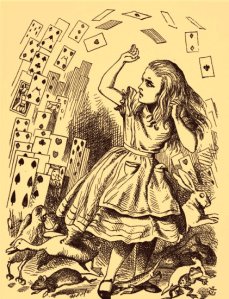 I’ve been grappling with a challenge I variously refer to as procrastination, low motivation, or a need for an astronomical amount of down/processing time, for awhile now. Years, actually. As you can see by my list of labels, the crux of the problem is not solving it (problem-solving is one of my natural strengths), but defining its nature (possibly less of a strength). Longtime readers may recognize this state of bemused non-functionality from the inception of Sensitive Type.
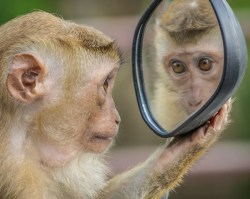 It continues to astound me how many things about myself I have overlooked, or underestimated the importance of, often for decades. I’m so perceptive about other peoples’ feelings – how could I be so dense?? Is it all due to a childhood during which my feelings and desires were constantly criticized and belittled? Or is there some inherent inability in my personality (☾+♆ in the 12th?) to see the obvious when I am looking in the mirror?
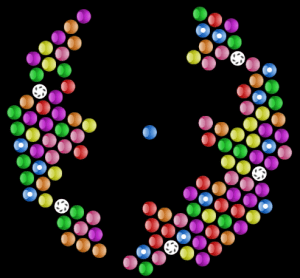 Life lessons can come from unexpected sources – snippets of overheard conversation in a public place, serendipitous discoveries while channel surfing, surprising insights from acquaintances who didn’t seem to be paying that much attention.
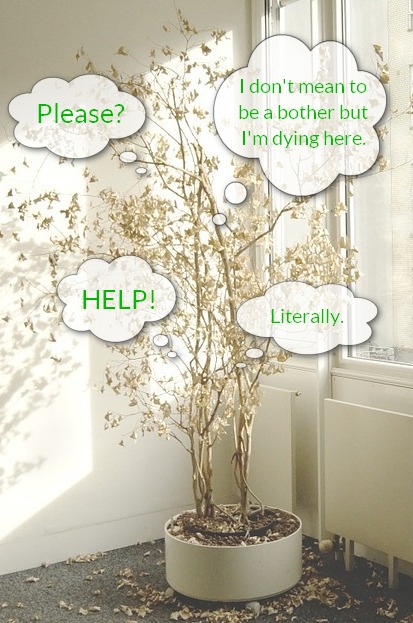
 Recently, a fellow HSP blogger raised the question of whether knowing one is an HSP might make depression a little easier to handle. In other words, could knowing you are an HSP help you to take a step back and become conscious of your own reactions and needs, instead of automatically acting them out?
  sensitive type